
Verona – Little Italy
Everyone knows Rome, Venice, and Florence — but Verona? It’s often overlooked. And that’s exactly why it feels so special. This little City is so underrated that we just had to make a full article about the home of Romeo and Juliet. Espresso at tiny bars,, Aperol Spritz at sunset and mouthwatering Cornetti filled with creamy pistachio – It has everything you want in an Italian city and not many people know about this place. Oh and yes, Verona even has its very own Colosseum, similar to the one in Rome.
That’s why here is a little list with everything you can do for 24 hours in Verona
1. ‘Citta Antica’
You can’t visit Verona without wandering its old town at least twice: once during the day and once at night.
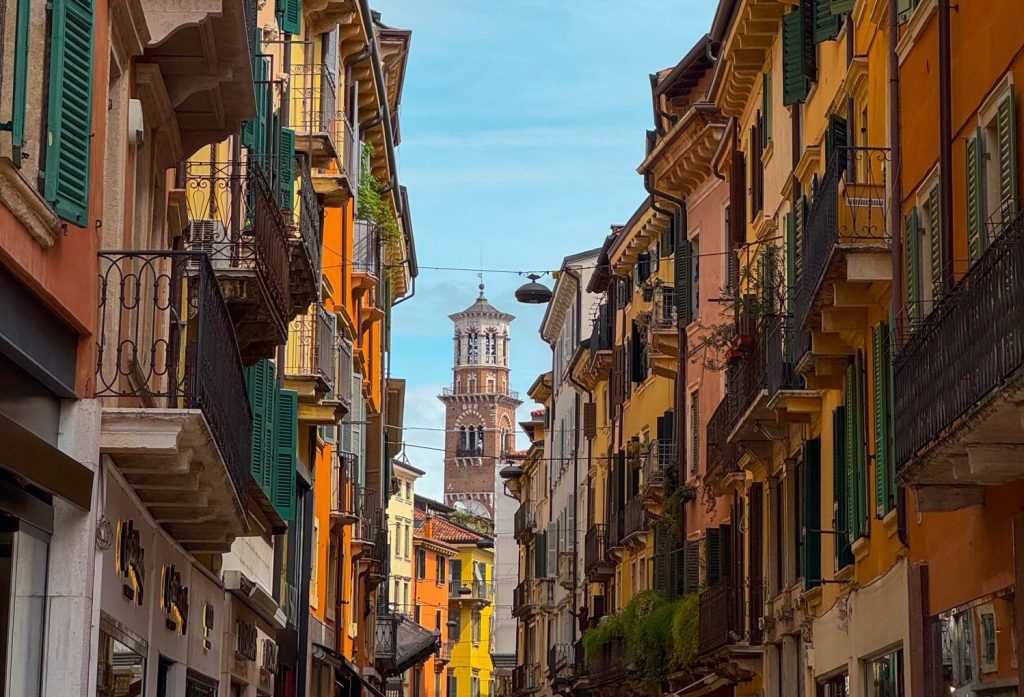
By day, the streets are alive. Shoppers drift through elegant boutiques, the smell of espresso hangs in the air, and street musicians strum Italian love songs on their guitars. The squares are framed by colorful houses, ancient towers, and fountains guarded by marble statues. The city feels vibrant and full of energy.
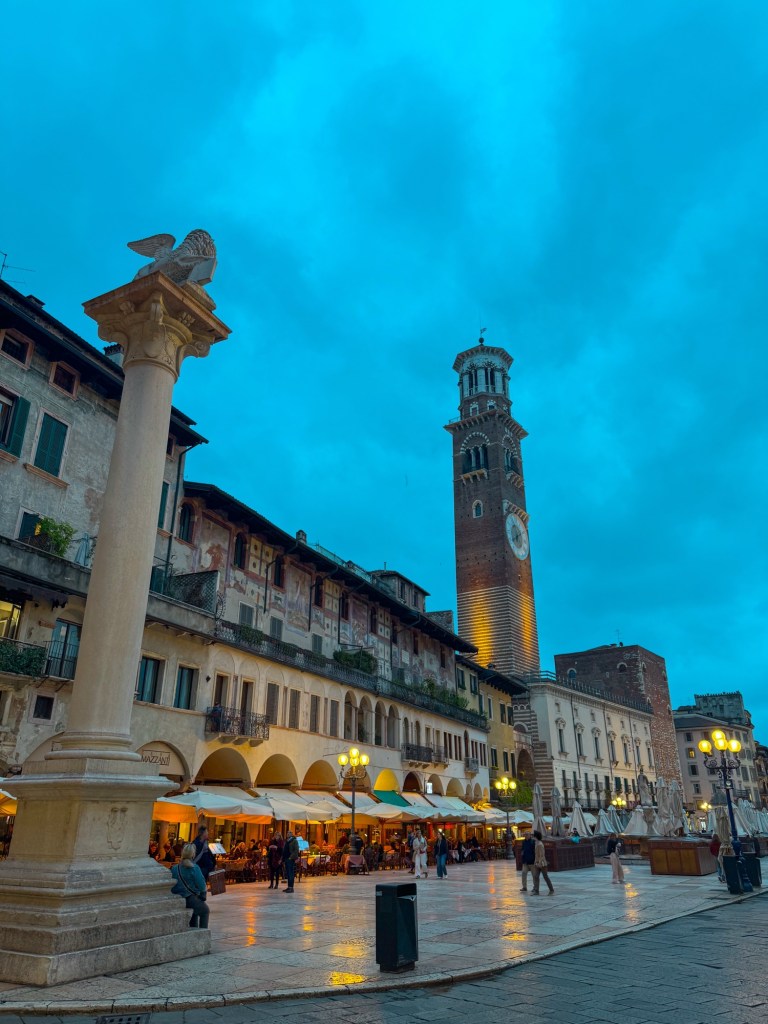
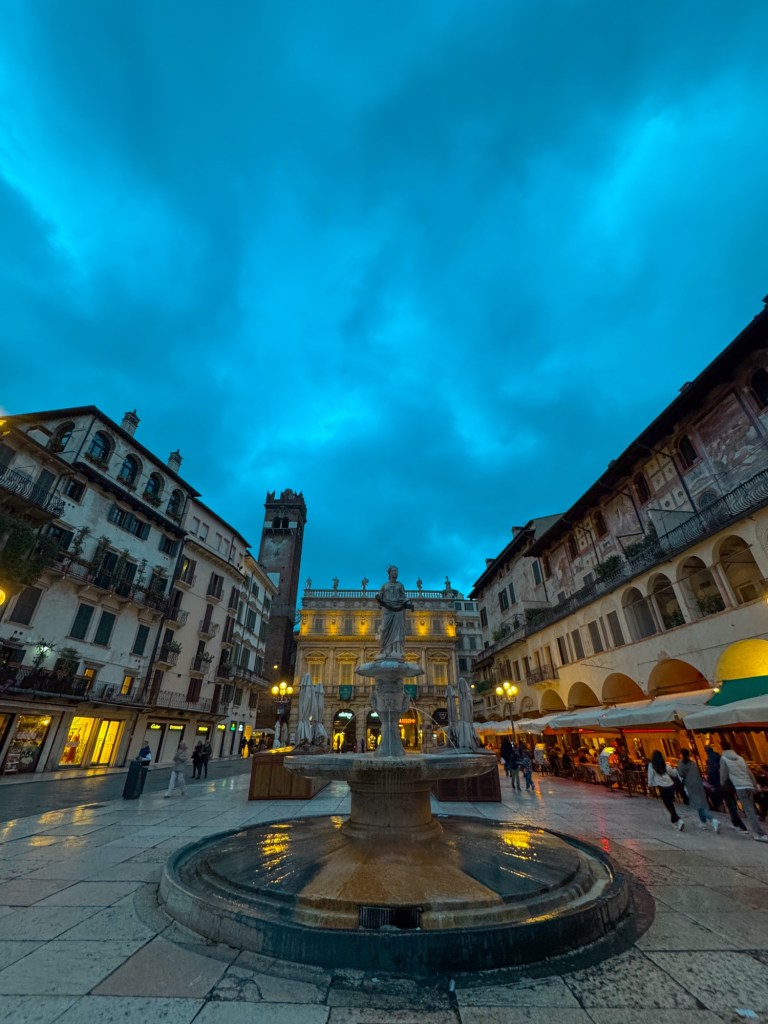
But when the evening starts, Verona changes. After a long dinner in one of the elegant restaurants, the atmosphere softens. People gather in the streets with glasses of wine, stylish locals laugh together, and the warm lights shimmer on the paving stones. Suddenly the 2,000-year-old Roman houses and bridges seem to glow. The heart of it all is Piazza delle Erbe, the most beautiful square in Verona. Standing there, you feel like you’ve stepped into a movie set.
2. Basilica di Santa Anastasia
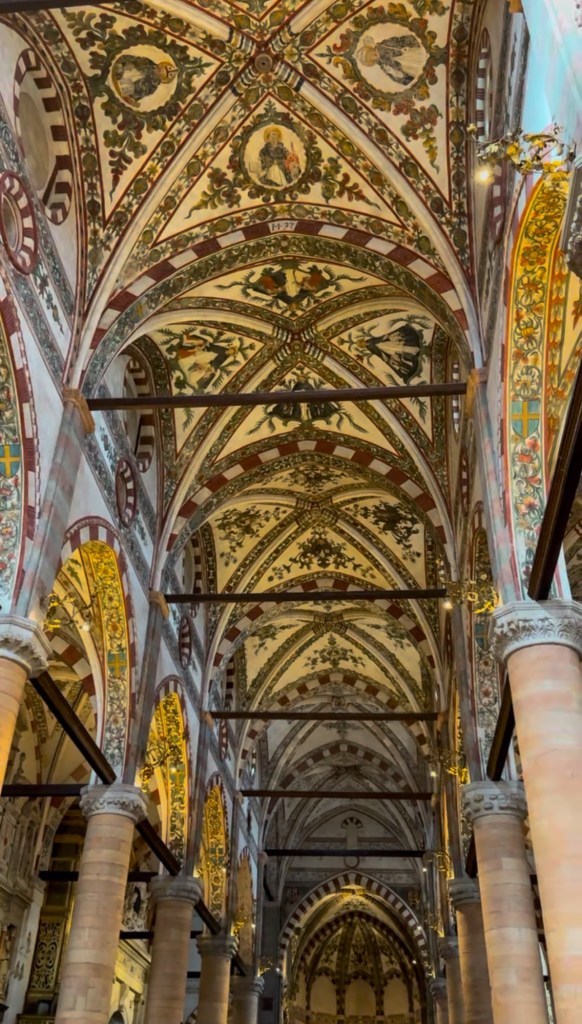
Verona is filled with churches — more than 40 of them — but the Basilica di Santa Anastasia is the one that will stay with you. At first, the outside of the biggest church in Verona might not impress you too much. But step inside, and you’re standing in a Gothic masterpiece, around 700 years old. The high arches, detailed frescoes, and play of light feel almost magical. You immediately understand why it took them almost 2 centuries to build it.
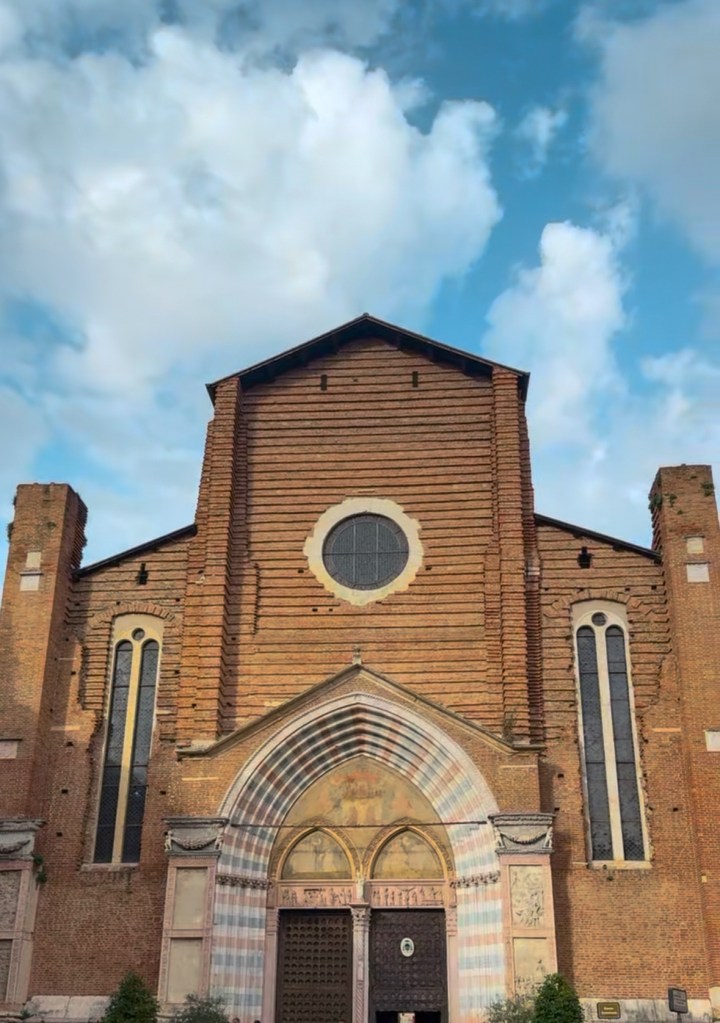
The strangest thing is what happens after: when you walk back outside, the church suddenly looks beautiful to you from the outside too. It’s as if seeing the inside has changed the way you see the whole building. That’s the kind of effect this basilica has.
3. Casa di Giulietta
No trip to Verona is complete without a stop at the Casa di Giulietta — the legendary house said to have inspired Shakespeare’s Romeo and Juliet. It’s one of the most popular spots in the city, and yes, it gets crowded, but it’s still worth a visit.
Inside the house you’ll find a museum, with period furniture, costumes from film adaptations, and of course the famous balcony overlooking the courtyard below.
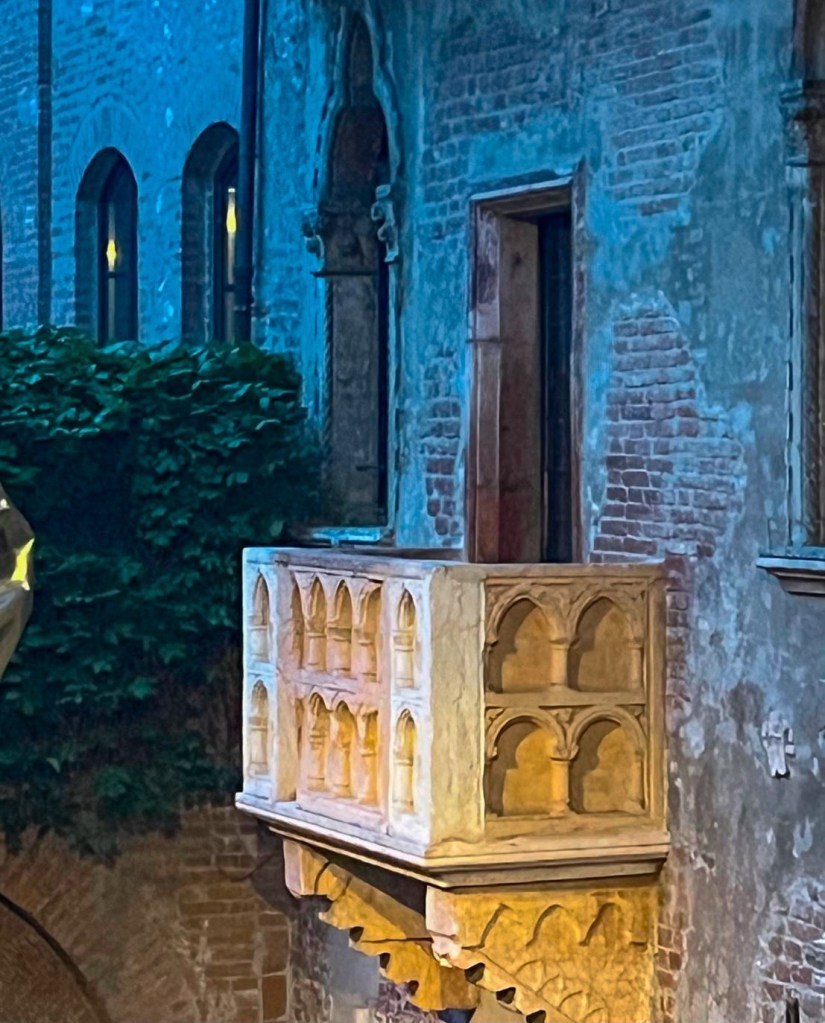
Important to know: the gates to the courtyard close at 7:00 p.m. sharp. So if you want to see the balcony lit up in the evening or you arrive too late, here’s a little secret: go into the shop next door. From the upstairs window you can look straight onto the balcony — and as a bonus, you can do it with a slice of creamy tiramisu in front of you. It’s a quieter, sweeter way to enjoy Juliet’s world without the rush of the daytime crowds.
4. Castel San Pietro
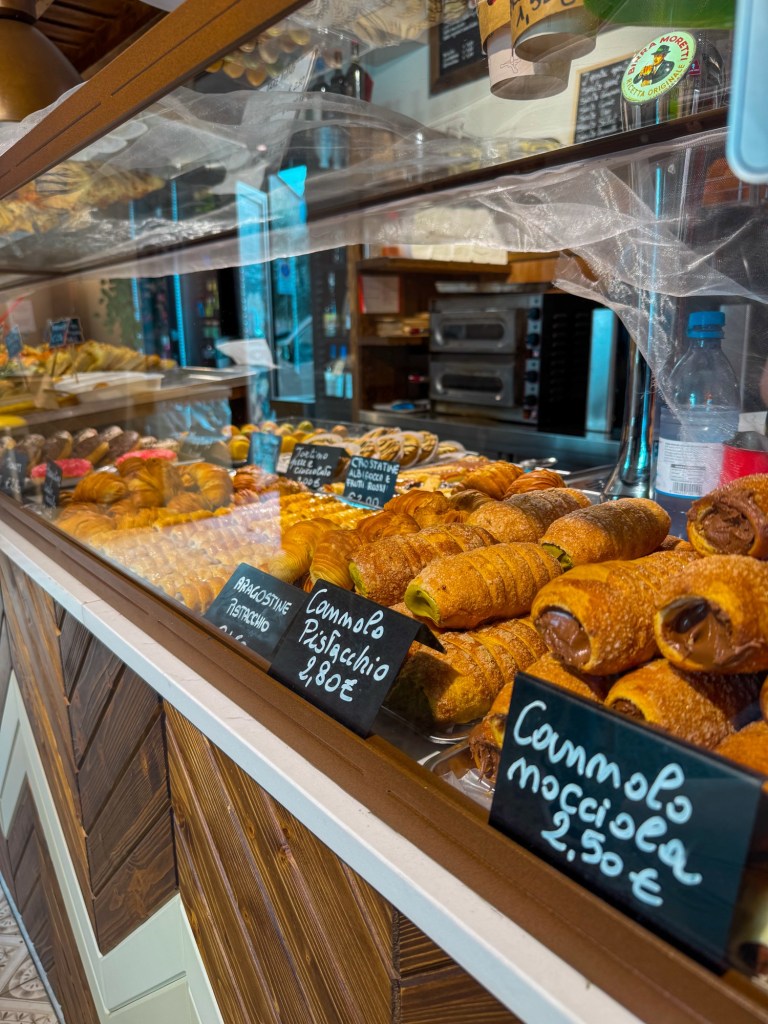
On the other side of the Adige River lies Veronetta, a quieter neighborhood full of student life, small cafés, and hidden streets. From here you can take the Funicolare di Castel San Pietro, a short cable car ride that brings you up the hill for just 3 euros. It saves you the steep climb — but if you’re in the mood for a little workout, the walk up is actually a treat. You pass cozy cafés and restaurants along the way, perfect for stopping for an espresso or a sweet cornetto to fuel you up.
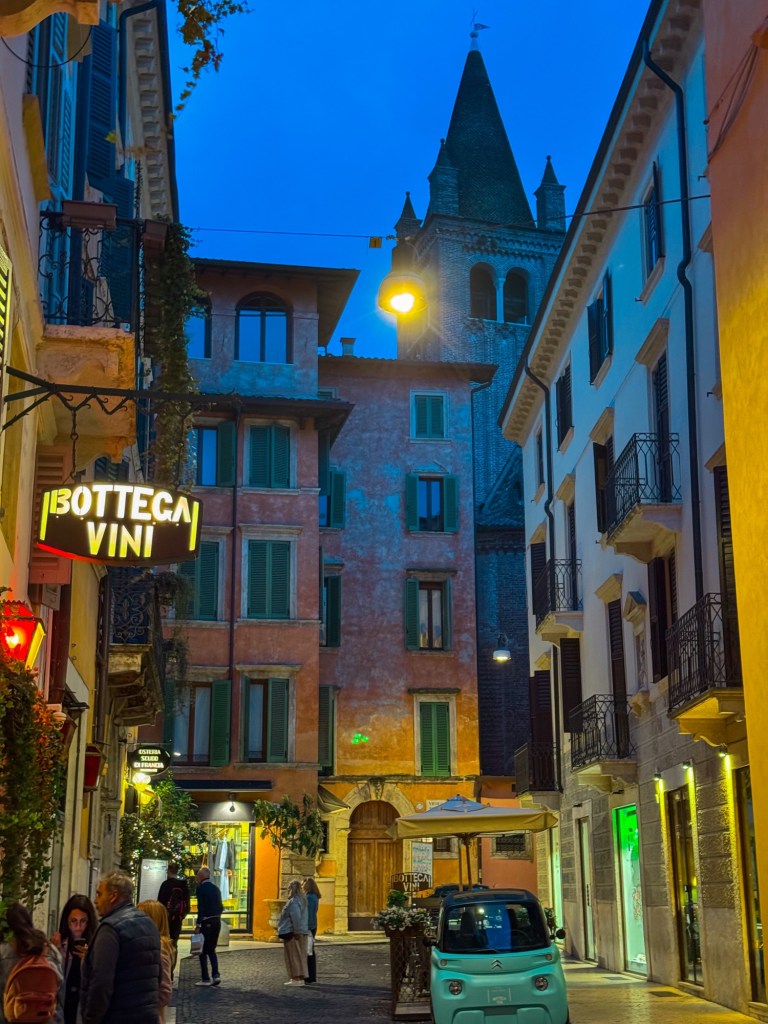
At the top, the reward is one of the best views in all of Verona. From the terrace, the city opens up in front of you like a painting: the Ponte Pietra crossing the river, the slender Torre dei Lamberti rising above the rooftops, and the warm terracotta tones of the old town glowing in the sunlight. In the evening, when the sun sets and the city lights begin to shine, the view is even more magical — one of those moments you’ll always remember.
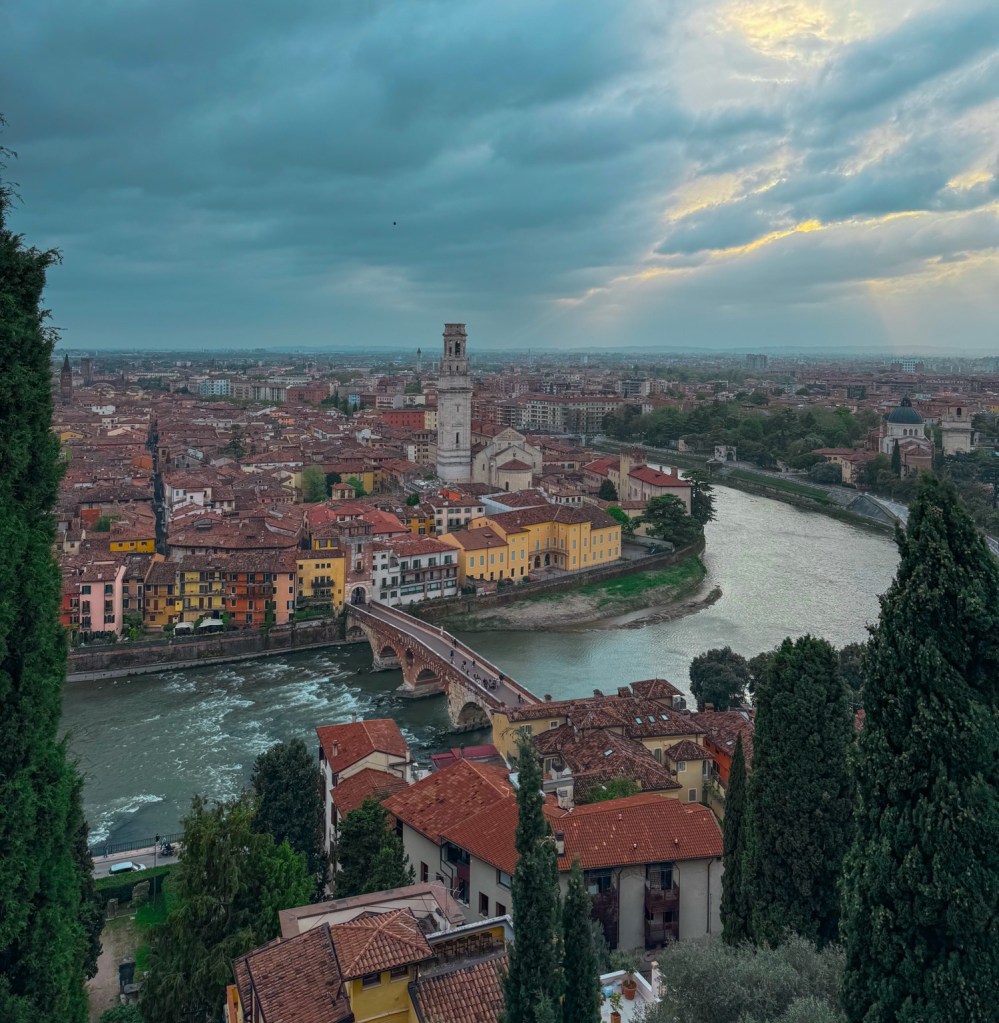
Castel San Pietro itself is more of a viewpoint than a castle you can visit, but that doesn’t matter. The panorama is the real attraction here. Verona is one of those rare cities that looks just as beautiful from above as it does from the streets — maybe even more so.
5. Signora Di Lourdes
If you still have energy, continue to climb higher toward the surrounding hills. From there, you’ll get an even wider perspective of the city and the rolling landscape of Veneto beyond. It’s a reminder that Verona is not just about Roman ruins and piazzas — it’s also about its setting, nestled perfectly between hills and river, a place where history and beauty stretch in every direction.
While Castel San Pietro gives you the classic postcard view of Verona, the Santuario della Madonna di Lourdes shows you the city from an even higher, more dramatic angle. Perched on the hill across the river, this sanctuary feels a little more remote and peaceful, with wide terraces that open up to sweeping views over the entire old town, the Arena, and far beyond to the hills of Valpolicella.
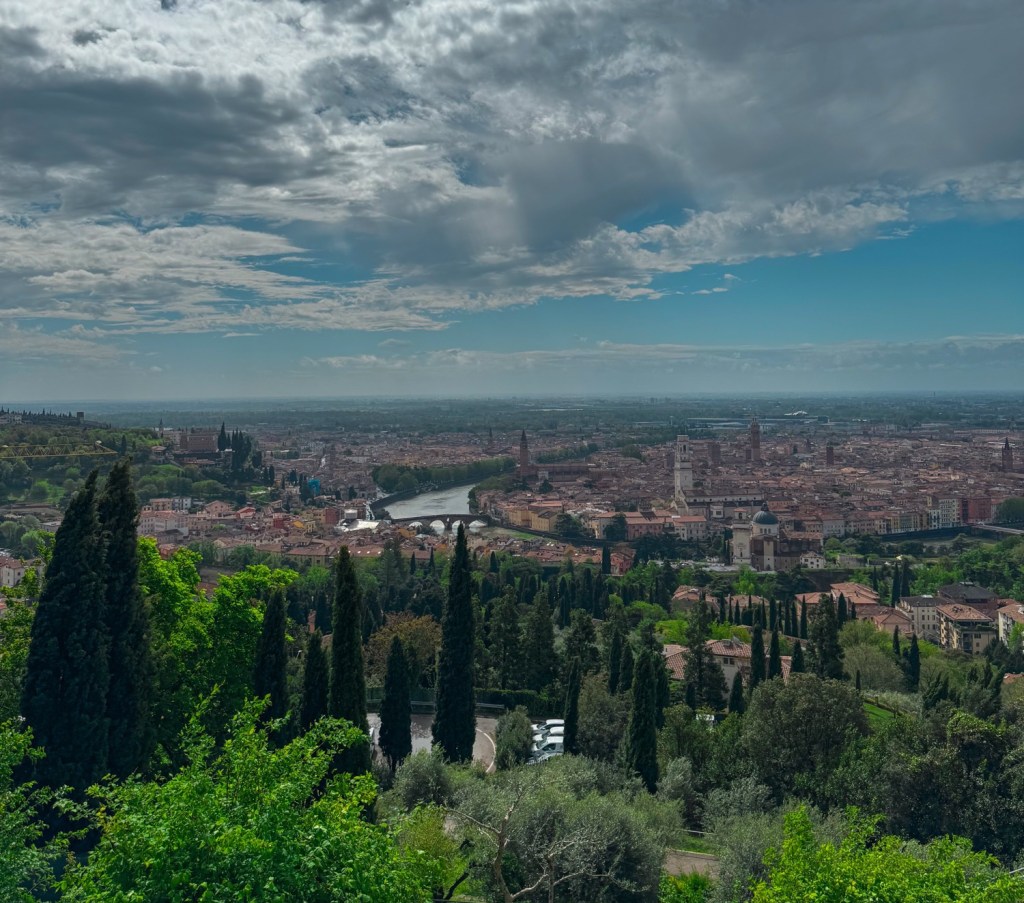
The church itself is worth a look — simple, quiet, and surrounded by cypress trees — but the real highlight is the perspective. From up here, Verona looks like a living map: the Adige River curling around the city, the terracotta rooftops stacked together, and the Roman bridges glowing in the afternoon light.
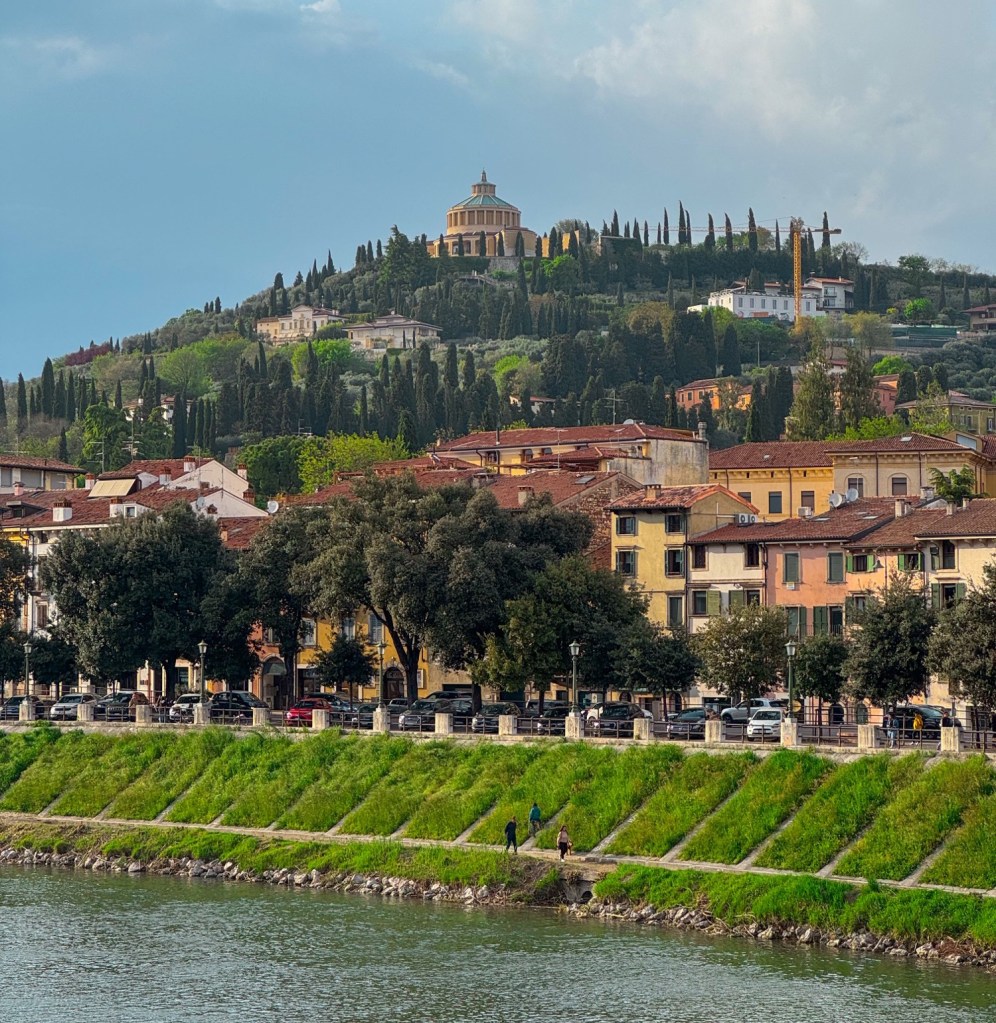
Getting there by foot is possible, but it’s a serious uphill walk. If you have a car, this is the moment to use it
Special Tip
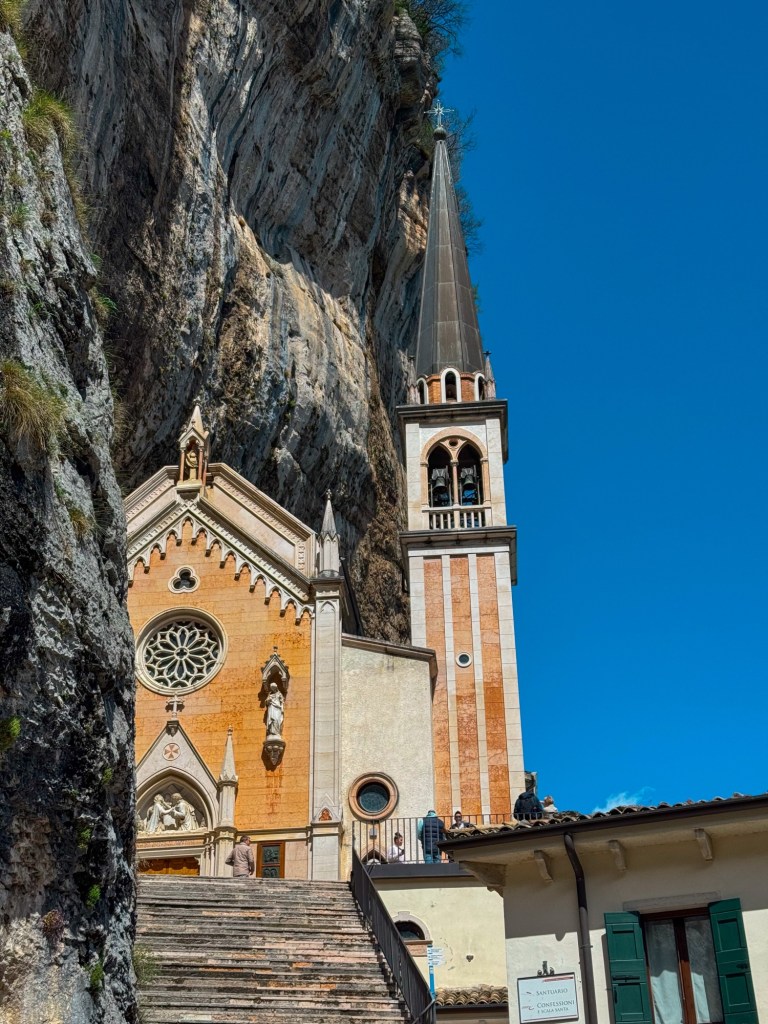
If you have a car and a little extra time, don’t miss the Santuario della Madonna della Corona — about an hour’s drive from Verona. It’s without doubt one of the most extraordinary churches we’ve ever visited.
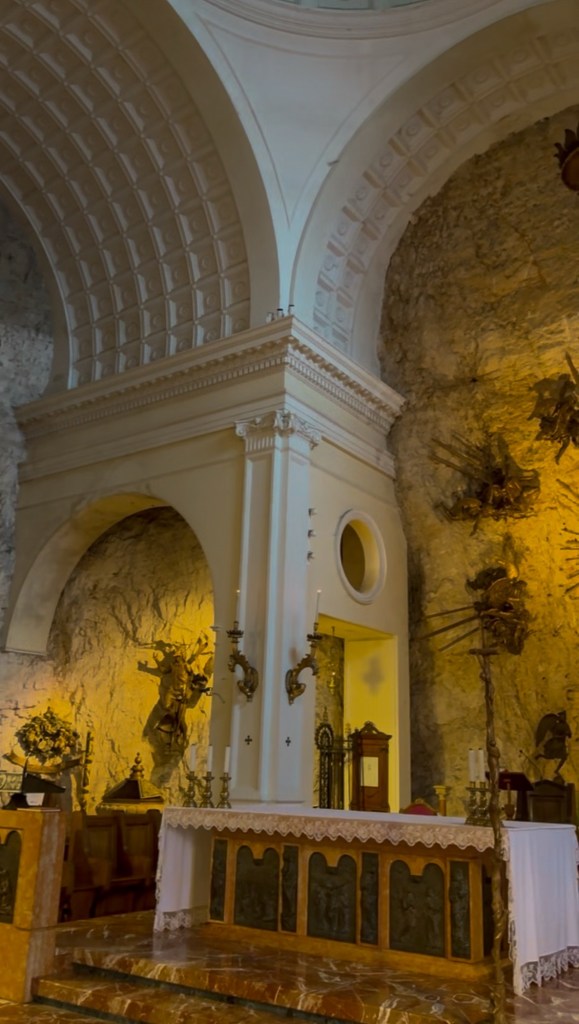
Built directly into the cliffs of Monte Baldo, the sanctuary seems to cling to the rock face, half hidden, half revealed. From the terraces you get a breathtaking view over the Adige Valley far below, the mountains rising all around you. It’s a setting so dramatic that it feels almost unreal.

From the parking area it’s about a 10–15 minute walk down to the church. The path itself is part of the pilgrimage experience: along the way, you’ll pass a series of bronze statues depicting the Stations of the Cross. Each one shows a different moment from Christ’s Passion — from his condemnation by Pilate, to carrying the cross through Jerusalem, his falls, the compassion of Veronica, and finally the Crucifixion and entombment. Walking past these scenes adds a deep, almost cinematic atmosphere.
If you’d rather save your energy for the sanctuary, there’s also a shuttle bus for just 2€ that takes you directly down and back up again.
Once you arrive, the sight is unforgettable: the church walls merging with the mountain rock, the quiet inside filled with candles and prayers, and outside that sweeping view that makes you pause and just take it all in. This place isn’t only a religious site — it’s a masterpiece of nature and faith combined.
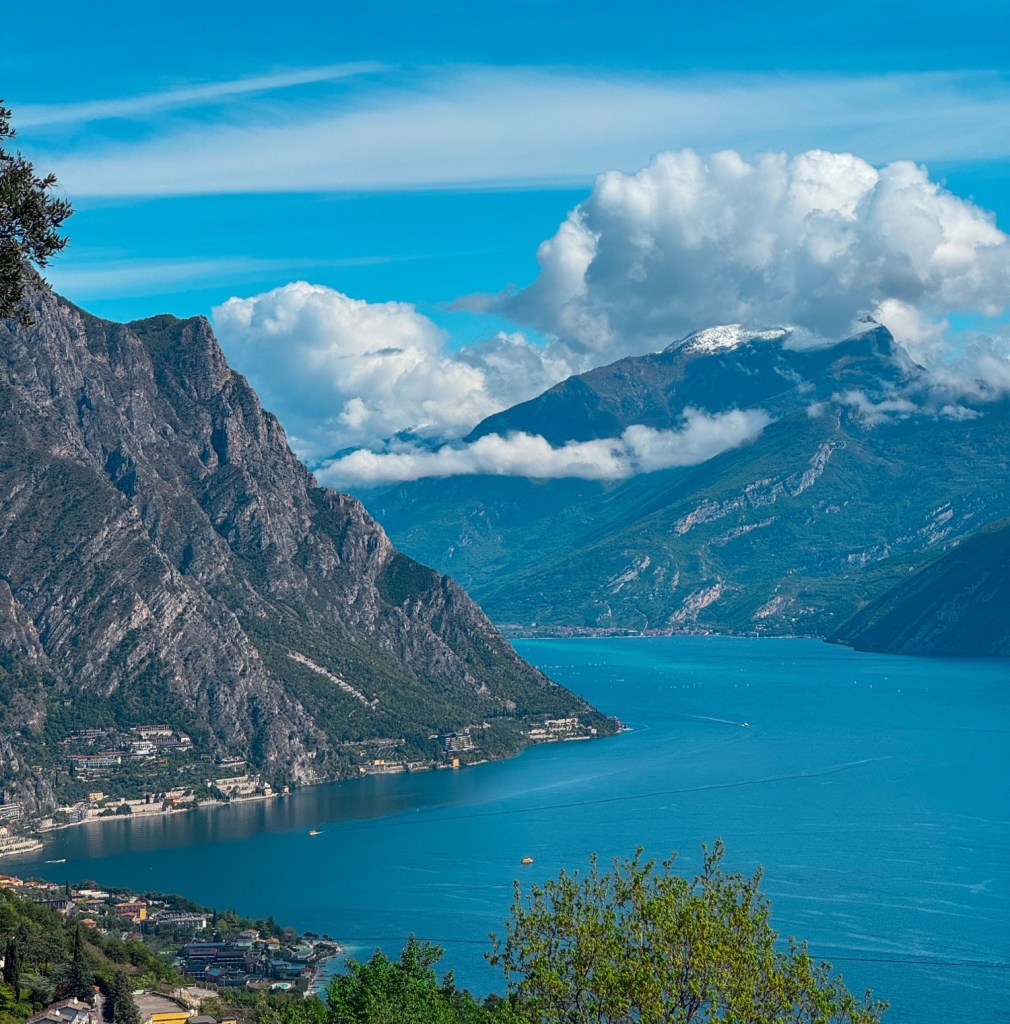
And if you still have time, remember that Monte Baldo has two faces. On the other side of the mountain lies Lago di Garda, with its sparkling waters and charming lakeside towns like Malcesine and Limone sul Garda. A Trip to that combines history, nature, and the pure dolce vita.
Do you want to discover more places in Italy?
We wrote a full article about Lake Como – with top places and things to do!
Hey, fellow traveler!
Are you interested in our travel stories, hidden gems & how we manage to travel so much with out 9 to 5 jobs?
 Exploreaholic
Leave a comment